Roof Cleaning 101: Why It Matters and How to Do It Safely
Reading time: 14 minutes
Ever looked up at your roof and noticed those dark streaks, patches of green, or fuzzy black growths creeping across your shingles? You’re not imagining things — and you’re definitely not alone. Millions of homeowners across the country deal with dirty, compromised roofs every single year, yet most of them have no idea how much that grime is quietly costing them.
Here’s the straight talk: a dirty roof isn’t just an eyesore. It’s a slow-moving structural threat, an insurance risk, and a silent drain on your home’s value. But with the right knowledge and approach, roof cleaning becomes one of the highest-return maintenance investments you can make.
This guide is your practical roadmap — from understanding why roofs get dirty and what it actually costs you, to choosing the safest, most effective cleaning method for your specific situation.
Table of Contents
- Why Roof Cleaning Actually Matters
- What’s Growing on Your Roof (And Why It’s Dangerous)
- Roof Cleaning Methods: Choosing the Right Approach
- DIY vs. Professional Cleaning: A Practical Comparison
- Safety First: How to Avoid the Most Common Roof Cleaning Mistakes
- Real-World Examples: What Neglect and Action Look Like
- How Often Should You Clean Your Roof?
- Frequently Asked Questions
- Your Roof Maintenance Roadmap: Next Steps
Why Roof Cleaning Actually Matters
Let’s start with a number that might surprise you: according to the National Roofing Contractors Association (NRCA), biological growth — algae, moss, lichen, and mold — is responsible for shortening the average residential roof lifespan by up to 10 years when left untreated. In 2026, with asphalt shingle replacement costs averaging between $9,000 and $22,000 depending on roof size and material, that kind of premature aging is a serious financial hit.
But the financial case goes deeper than just replacement costs. Consider these compounding effects:
- Increased energy bills: Algae and dark staining absorb more heat, raising attic temperatures and forcing your HVAC system to work harder. Studies suggest this can increase cooling costs by 10–15% during summer months.
- Insurance complications: Several major insurers now perform aerial drone inspections as part of policy renewals. A severely compromised or heavily soiled roof can trigger coverage reductions or premium increases.
- Reduced property value: Curb appeal directly impacts appraisals. Real estate data from 2025 shows that visible roof discoloration can reduce a home’s perceived value by 3–5% in buyer negotiations.
- Structural water damage: Moss and lichen physically lift shingles, creating pathways for water infiltration — the leading cause of attic mold and wood rot.
The bottom line? Roof cleaning isn’t optional maintenance. It’s preventive investment — and one of the smartest ones you can make as a homeowner.
What’s Growing on Your Roof (And Why It’s Dangerous)
Not all roof invaders are created equal. Understanding what you’re dealing with helps you choose the right treatment and set realistic expectations for results.
The Big Four Biological Threats
1. Gloeocapsa Magma (Blue-Green Algae)
This is the culprit behind those dark black streaks you see on asphalt shingle roofs across North America. Gloeocapsa Magma is a cyanobacteria that feeds on the limestone filler in asphalt shingles. It spreads through airborne spores and thrives in humid, shaded environments. Left untreated, it gradually eats through the protective granule layer of your shingles — accelerating UV damage and reducing weather resistance.
2. Moss
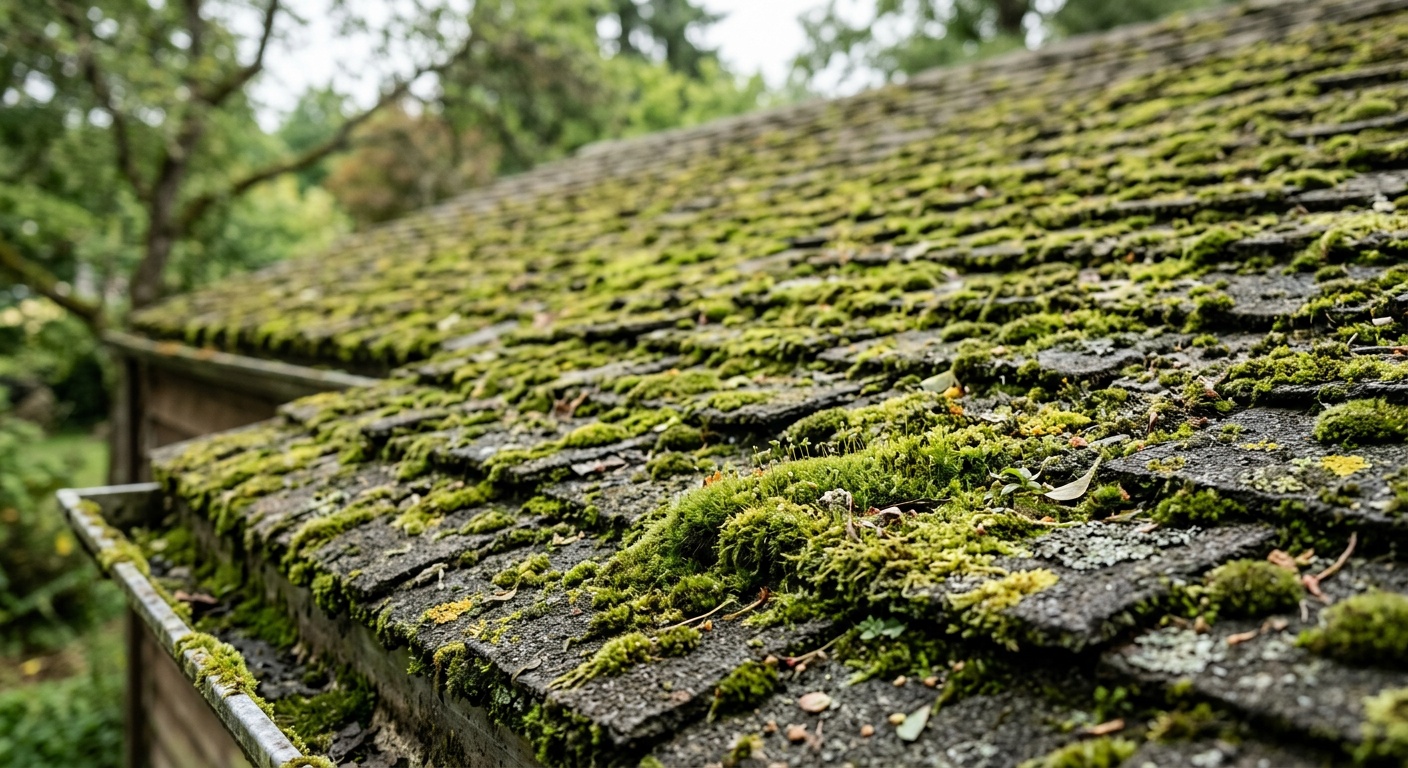
Moss is the fuzzy, green carpet-like growth most common on wood shake roofs and shaded asphalt shingles in Pacific Northwest and Southeastern climates. Unlike algae, moss has physical root-like structures (rhizoids) that wedge between shingles, causing them to lift, crack, and eventually break away. Moss also retains significant moisture — as much as 20 times its dry weight — keeping your roof perpetually damp and vulnerable to freeze-thaw damage in colder climates.
3. Lichen
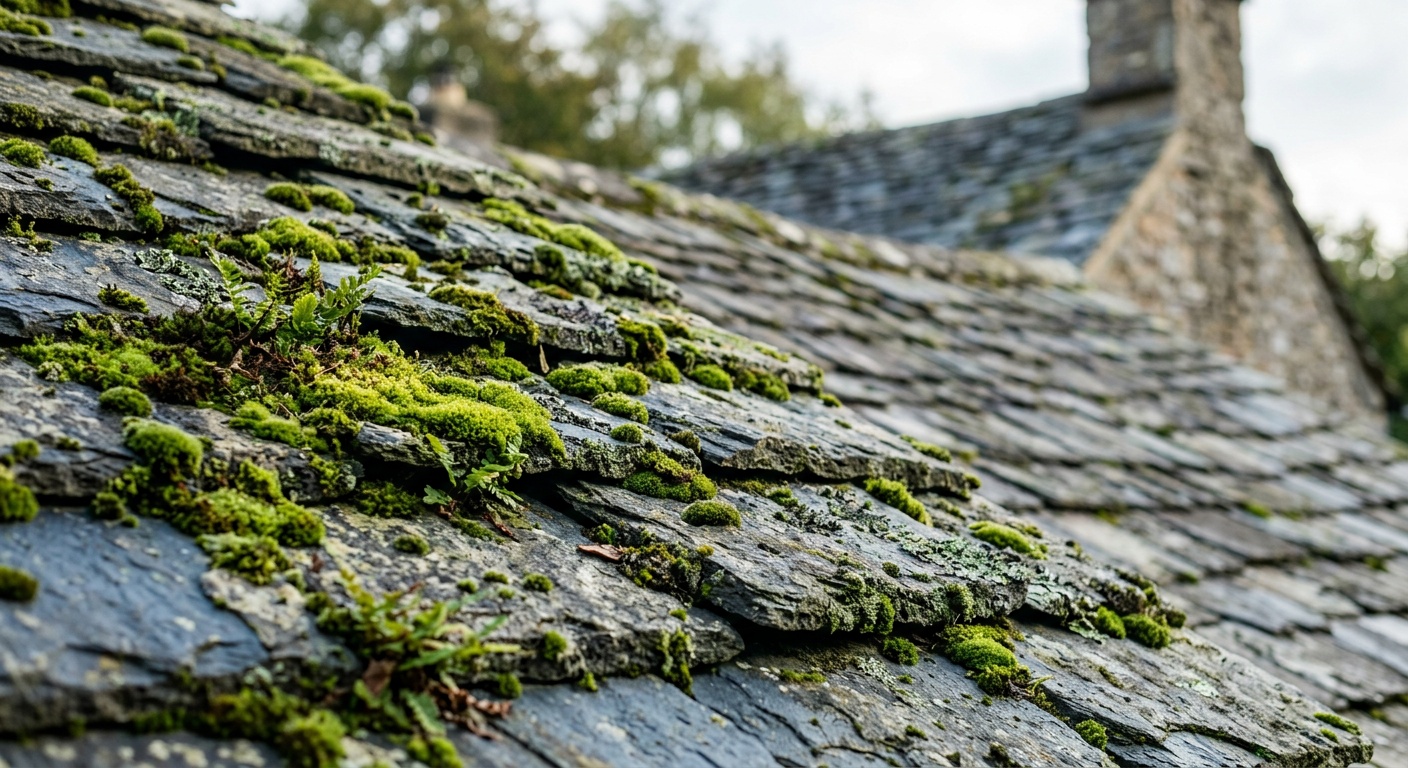
Lichen is arguably the most stubborn roof invader. It’s a symbiotic organism combining algae and fungus, and it bonds directly to roofing materials with a near-permanent adhesive. Lichen is incredibly difficult to remove without professional intervention and, if scraped off forcefully, can take granules and surface material with it. It requires specific chemical treatments and patience — results often take weeks to months to fully appear after treatment.
4. Mold and Mildew
While less structurally destructive than moss or lichen, mold and mildew on your roof can migrate into your attic space through ventilation gaps, creating serious indoor air quality problems. In 2025, the EPA updated its guidelines on residential mold risks, noting that attic mold remediation projects cost homeowners an average of $3,500 to $8,000 — a cost that’s almost entirely preventable with routine roof maintenance.
Why Climate Change Is Making This Worse
By 2026, the connection between shifting climate patterns and increased roof biological growth is impossible to ignore. Warmer winters, increased humidity across previously dry regions, and more frequent rain events create ideal breeding conditions for algae and moss. Homeowners in areas like the Mid-Atlantic, Southeast, and Pacific Northwest are particularly seeing escalating growth rates compared to just a decade ago. If you’ve never had to deal with roof algae before, that might be changing soon regardless of where you live.
Roof Cleaning Methods: Choosing the Right Approach
There are three primary methods used for roof cleaning today, each with distinct advantages, risks, and ideal use cases. Understanding which one fits your situation is critical — using the wrong method can cause more damage than the growth itself.
Soft Washing: The Industry-Recommended Standard
Soft washing uses a low-pressure water delivery system combined with a specially formulated chemical solution — typically sodium hypochlorite (bleach) at concentrations between 0.5% and 3%, often blended with surfactants to improve adhesion and rinsing. The chemical does the actual killing and cleaning work; the water simply delivers and rinses it.
Why it’s preferred: The Asphalt Roofing Manufacturers Association (ARMA) explicitly recommends soft washing as the only safe cleaning method for asphalt shingles. Pressure washing, even at relatively low PSI, can strip granules — irreversible damage that immediately accelerates shingle aging.
Best for: Algae (blue-green streaks), light moss, mildew, and general surface staining. Results on algae are typically visible within 24–48 hours as organisms die and wash away naturally with rain.
Limitations: Requires careful handling of chemical solutions. Improper application can harm landscaping below the roofline (plants should be pre-watered and covered). Not ideal for severe lichen without follow-up treatments.
Pressure Washing
High-pressure washing (typically 1,500–3,000 PSI) is effective at physically blasting organic growth off roof surfaces but carries significant risks for most roofing materials. It is sometimes appropriate for concrete or clay tile roofs but should never be used on asphalt shingles, wood shake, or slate. Even for tile, pressure should be carefully controlled and directed downward, never upward under tile edges.
Manual Removal + Chemical Treatment
For severe moss or lichen infestations, the most effective approach combines gentle manual scraping (using soft-bristle brushes, never metal tools) followed by chemical treatment. This two-step method takes more time and effort but delivers more complete results when growth is too thick for chemicals alone to penetrate effectively.
DIY vs. Professional Cleaning: A Practical Comparison
One of the most common questions homeowners ask is whether to tackle roof cleaning themselves or hire a professional. The honest answer: it depends on several factors specific to your situation. Here’s a clear breakdown:
| Factor | DIY | Professional Service |
|---|---|---|
| Average Cost (2026) | $80–$250 (materials) | $400–$1,200 (labor + materials) |
| Safety Risk | High (falls, chemical exposure) | Low (trained, insured workers) |
| Equipment Needed | Garden sprayer, safety gear, extension ladder | Provided by contractor |
| Result Quality | Variable (skill-dependent) | Consistently high |
| Best For | Single-story, light algae staining | Multi-story, heavy moss/lichen, steep pitches |
Pro Tip: If your roof pitch is steeper than 6:12 (that’s a 6-inch rise for every 12 inches of horizontal run), seriously reconsider DIY. Falls from roofs remain among the top causes of fatal home improvement accidents. In 2025, the Consumer Product Safety Commission reported over 170,000 ladder-related injuries requiring emergency room visits — the majority occurred during home maintenance tasks.
Safety First: How to Avoid the Most Common Roof Cleaning Mistakes
Whether you’re going DIY or supervising a contractor, understanding the key safety principles protects both you and your roof. These aren’t just formalities — they’re the difference between a successful cleaning and a costly disaster.
Personal Safety Essentials
- Never work on a wet roof. Even soft washing leaves surfaces slippery. Always clean on a dry day with no rain forecast for at least 24 hours.
- Use proper fall protection. At minimum: non-slip footwear (rubber-soled boots with ankle support), a safety harness attached to a ridge anchor, and a spotter on the ground if working at height.
- Protect yourself from chemical exposure. Sodium hypochlorite solutions require chemical-resistant gloves, eye protection (safety goggles, not just glasses), and old clothing you don’t mind potentially bleaching.
- Work in manageable sections. Never overreach on a ladder or roof. Reposition frequently rather than stretching to cover more area.
- Inform someone of your work. Especially for solo DIYers — always let someone know you’re on the roof before you start.
Protecting Your Property During Cleaning
- Pre-water all plants and landscaping around the roofline before applying any chemical solutions. This dilutes any runoff and reduces stress on vegetation.
- Cover HVAC intakes and vents with plastic sheeting temporarily to prevent chemical vapor intrusion.
- Rinse gutters thoroughly after cleaning. Chemical residue accumulating in gutters can degrade metal components and harm ground-level plants during subsequent rain events.
- Check the wind direction before spraying. Applying solutions upwind of your work area means chemical mist blows toward you — always work with the wind at your back.
Chemical Concentration: Getting It Right
One of the most common DIY mistakes is using undiluted bleach solutions, believing stronger means better results. In reality, concentrations above 3% sodium hypochlorite can damage shingle granules, discolor metals, and create excessive fumes. The recommended dilution for most asphalt shingle applications is a 1:3 ratio (one part bleach to three parts water) with a small amount of dish soap as a surfactant. Always mix chemicals outdoors and never in enclosed spaces.
Real-World Examples: What Neglect and Action Look Like
Case Study 1: The $18,000 Lesson in Portland, Oregon
Consider the experience of a homeowner in Portland’s Sellwood neighborhood who purchased a 1970s craftsman home in 2020. The home had an existing moss problem that the previous owners had ignored for years. The new owner, focused on interior renovations, continued to delay roof cleaning for four years. By 2024, what had started as cosmetic moss coverage had progressed to significant shingle lifting and water infiltration into the attic structure. The repair bill? $18,400 — including partial roof replacement, wood rot remediation in the attic, and a new ridge vent system. A professional roof cleaning in 2020 would have cost approximately $650. This case illustrates perfectly how deferred maintenance compounds exponentially over time.
Case Study 2: The HOA That Got It Right in Savannah, Georgia
A homeowners association in a 200-unit community in Savannah, Georgia implemented a biennial (every two years) community-wide roof cleaning program in 2021 as part of their exterior maintenance contract. By 2025, they conducted a comparative property value analysis and found that homes in their community showed 4.2% higher average sale prices than comparable properties in adjacent developments where roof maintenance wasn’t standardized. The program costs the community approximately $45 per unit per year — a return on investment that made the HOA board’s quarterly report look very good indeed. Their secret? Starting early and staying consistent, rather than waiting for visible damage to appear.
How Often Should You Clean Your Roof?
There’s no universal answer — frequency depends on your local climate, roof material, surrounding tree coverage, and history of biological growth. But here are solid general guidelines based on current industry standards:
Recommended Roof Cleaning Frequency by Climate Type (2026)
Bar width reflects relative frequency of cleaning needed. Red = most frequent, Blue = least frequent.
Beyond climate, watch for these trigger signs that indicate cleaning is needed regardless of schedule:
- Visible dark streaking on 10% or more of the roof surface
- Any visible moss or lichen growth (treat immediately)
- Granules accumulating in gutters or downspout splash zones in unusual quantities
- Neighbors’ roofs showing visible algae growth (spores spread easily)
- After any prolonged period of shade from newly grown or damaged trees
Post-Cleaning Preventive Treatments
An often-overlooked step: after cleaning, applying a zinc or copper-based preventive treatment can significantly slow biological regrowth. Zinc strips installed along the ridge of the roof release trace minerals with every rain, creating an inhospitable environment for algae and moss. In high-humidity climates, this simple addition can extend the interval between required cleanings by 12–18 months.
Frequently Asked Questions
Is it safe to use bleach on my asphalt shingle roof?
Yes — when properly diluted. The Asphalt Roofing Manufacturers Association (ARMA) has endorsed sodium hypochlorite (bleach) as a safe and effective cleaning agent for asphalt shingles when used at appropriate concentrations (typically 1–3%) and properly rinsed. The key is avoiding high concentrations and ensuring thorough rinsing after treatment to prevent residue buildup. Undiluted or high-concentration bleach applications can degrade granules and accelerate shingle aging. Always follow the manufacturer’s dilution guidelines and protect surrounding landscaping from runoff.
Will cleaning my roof void my shingle warranty?
This is a critical question most homeowners forget to ask. The answer depends entirely on your shingle manufacturer and the cleaning method used. Most major manufacturers — including GAF, Owens Corning, and CertainTeed — explicitly support soft washing as a maintenance method and will not void warranties for properly performed chemical cleaning. However, pressure washing almost universally voids asphalt shingle warranties due to granule damage. Always check your specific warranty documentation before cleaning, and keep records of any professional cleaning service performed as maintenance documentation for warranty claims.
How long does roof cleaning take, and when will I see results?
For a professional soft wash of an average-sized residential roof (1,500–2,000 square feet), the cleaning process itself typically takes 2–4 hours. However, results aren’t always instant. Algae staining often begins visibly fading within 24–48 hours as organisms die and rain washes them away — full visual results may take 1–4 weeks. Moss treatment results are slower; dead moss can take 4–8 weeks to dry out and fall away naturally. Lichen is the slowest to show results, sometimes requiring 3–6 months of weathering before treated areas fully clear. Many professionals offer a follow-up inspection 30–60 days after service to assess results and address any areas needing additional treatment.
Your Roof Maintenance Roadmap: Next Steps
You now have the knowledge foundation to take decisive, informed action on one of your home’s most critical — and most overlooked — maintenance needs. Here’s how to translate that knowledge into a concrete plan starting today:
- Conduct a roof assessment this week. You don’t need to climb up there — use binoculars from the ground or review recent aerial photos of your property (Google Earth updates frequently enough for a general assessment). Look for dark streaking, green patches, or texture irregularities.
- Identify your roof material and local climate zone. This determines your appropriate cleaning method and how urgently you need to act. Refer to the frequency chart above.
- Get 2–3 quotes from licensed, insured soft wash specialists in your area. Ask specifically whether they use soft washing (not pressure washing), what chemicals they apply, and whether they offer a post-cleaning preventive treatment. Verify their insurance certificates — you want general liability and workers’ comp coverage.
- Schedule your cleaning during appropriate weather. Spring and early fall are ideal — temperatures should be between 50°F and 85°F, with no rain expected for 24–48 hours after treatment.
- Set a recurring maintenance reminder. Based on your climate zone, schedule your next inspection 12 months out and your next cleaning according to the frequency guidelines. Prevention always costs less than remediation.
As climate patterns continue shifting in 2026 and beyond, proactive roof maintenance is becoming less of a “nice to have” and more of a baseline expectation for responsible homeownership — one that insurance companies, real estate appraisers, and home buyers are increasingly paying attention to.
Your roof does something remarkable every single day: it protects everything and everyone underneath it without asking for anything in return. The least you can do is give it a clean once in a while. When did you last look up?