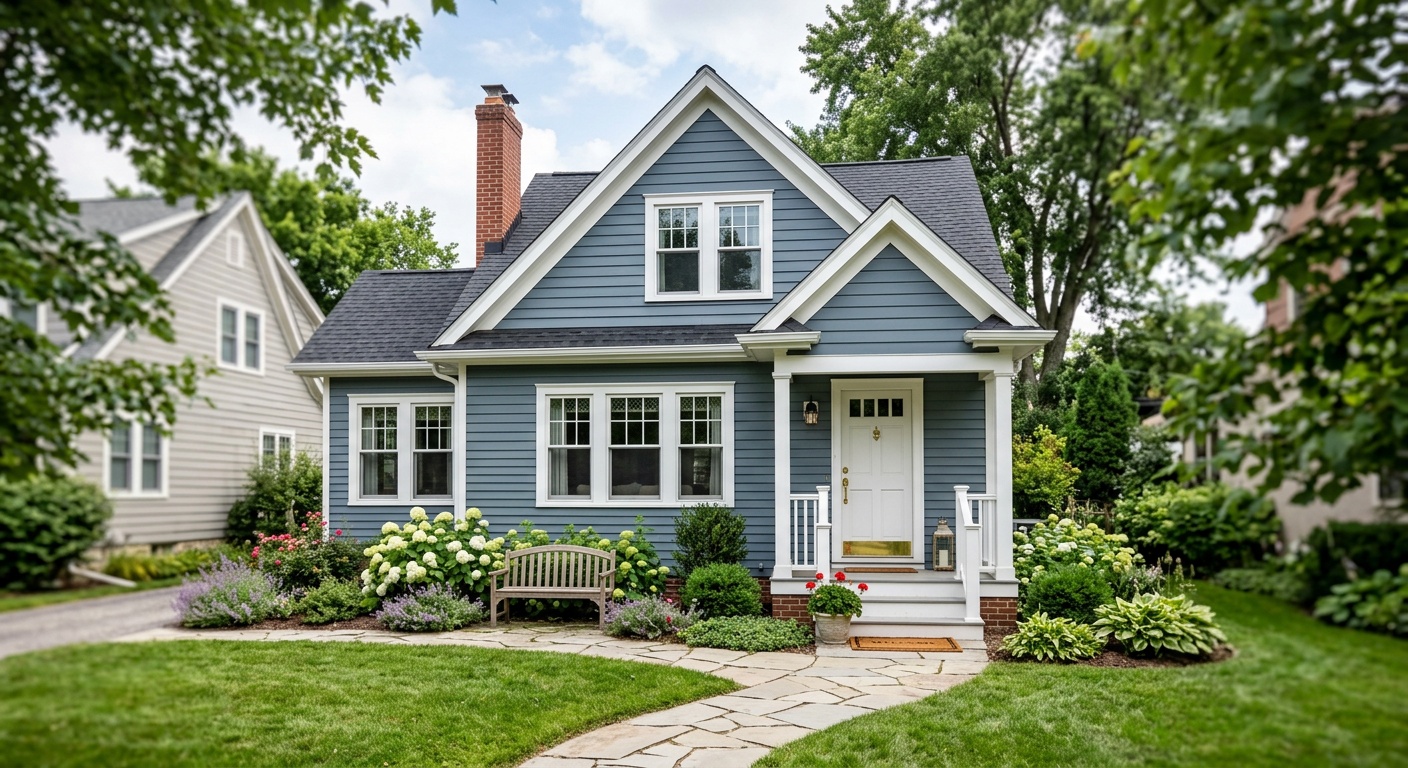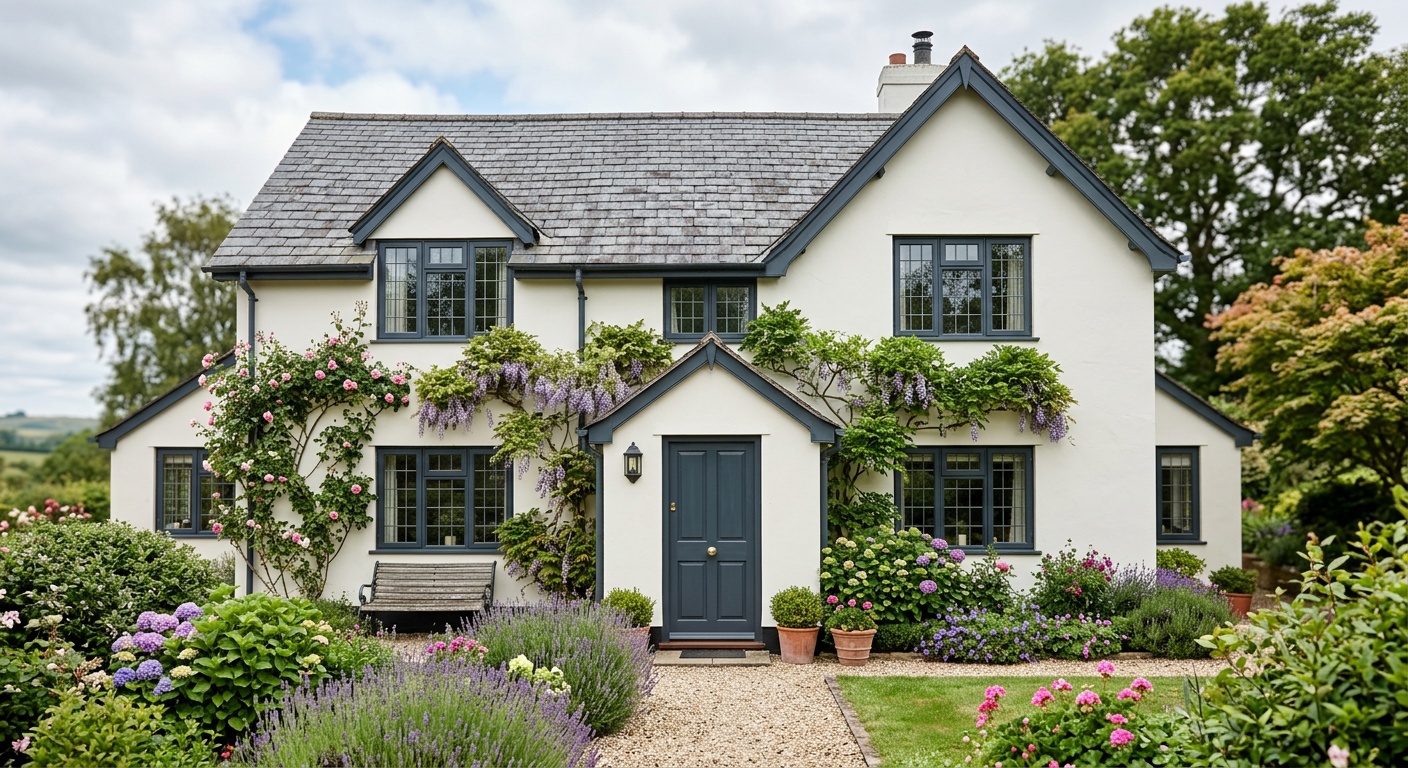
Best Exterior Paint Colors to Maximize Your Home’s Curb Appeal
Reading time: 12 minutes
Ever pulled up to a house and felt an immediate, inexplicable pull — like the home itself was saying welcome? That’s not magic. That’s the power of a perfectly chosen exterior paint color working overtime on your emotions. In 2026, with home values under constant pressure and buyers more visually savvy than ever, your exterior color choice isn’t just aesthetic — it’s financial strategy.
Whether you’re prepping for a sale, refreshing a tired facade, or building from the ground up, the right palette can add thousands to your home’s perceived value — or quietly sabotage it. Let’s cut through the noise and get precise about what actually works.
Table of Contents
- Why Exterior Color Is a Financial Decision, Not Just a Style One
- The Trending Exterior Colors Dominating 2026
- Matching Colors to Your Home’s Architectural Style
- 3 Common Color Mistakes That Kill Curb Appeal
- Color Impact: What the Numbers Say
- Exterior Paint Color Comparison Table
- Real-World Case Studies: Before and After
- Frequently Asked Questions
- Your Curb Appeal Action Plan: Next Steps
Why Exterior Color Is a Financial Decision, Not Just a Style One
Here’s the straight talk: The color of your home’s exterior isn’t just about personal taste — it’s one of the highest-ROI decisions you can make as a homeowner. According to a 2025 report by the National Association of Realtors (NAR), homes with strong curb appeal sell for an average of 7–14% more than comparable homes with poor exterior presentation. And within that equation, paint color is the single most impactful variable.
Think of your home’s facade like a first-impression handshake. Buyers, neighbors, and appraisers make subconscious judgments within the first eight seconds. Color triggers emotional responses — warmth, trust, cleanliness, energy — before anyone reads a listing description or steps inside.
In 2026, with AI-powered home valuation tools now factoring in satellite imagery and curb appeal scores into automated estimates, the stakes have never been higher. Platforms like Zillow and Redfin began integrating computer vision analysis into their algorithms in late 2024, meaning your exterior color is now literally being scored by machines.
“A fresh, well-chosen exterior paint job can yield a return on investment of up to 152%, making it one of the most cost-effective home improvement projects available.” — Remodeling Magazine, 2025 Cost vs. Value Report
So before you reach for that tried-and-true beige, let’s explore what’s actually performing in today’s market.
The Trending Exterior Colors Dominating 2026
Color trends cycle, but the smartest homeowners know how to ride a wave without becoming a victim of it. In 2026, we’re seeing a powerful shift away from the stark all-white aesthetic that dominated the early 2020s, toward warmer, earthier, more textured tones that feel both timeless and deeply contemporary.
Warm Neutrals: The Undisputed Champions
Greige (gray-beige hybrids), warm white with cream undertones, and soft taupe are commanding real estate listings in 2026. Benjamin Moore’s Color of the Year — Calla White OC-23 — exemplifies this trend: it’s not cold white, not bold, but a creamy, sophisticated neutral that photographs beautifully and appeals to the widest buyer demographic.
Why do warm neutrals win? Because they work with nearly every architectural style, every landscaping scheme, and every regional climate. They’re also forgiving — they hide minor dirt and weathering better than stark whites or deep darks.
Top Warm Neutrals for 2026:
- Sherwin-Williams Accessible Beige SW 7036 — a perennial best-seller for good reason
- Benjamin Moore Revere Pewter HC-172 — warm gray with subtle green undertones
- Behr Toasty SW-T18-4 — a new 2025 release that has exploded in popularity
- PPG Antique White PPG1025-2 — clean, classic, universally loved
Deep Moody Tones: Bold Bets with Big Payoffs
For homeowners willing to take a calculated risk, deep, saturated colors are having a significant moment in 2026. Forest greens, navy blues, charcoal grays, and even deep burgundy are making waves — particularly on craftsman, farmhouse, and contemporary architectural styles.
The key insight here is contrast. A deep charcoal body with crisp white trim creates a visual drama that stops people mid-scroll on listing sites. Zillow’s internal data from 2025 revealed that homes with dark exterior colors in the blue-green spectrum received 23% more listing saves than neutral-painted counterparts in urban and suburban markets.
Top Deep Tones for 2026:
- Sherwin-Williams Rookwood Dark Green SW 2809 — earthy, rich, and incredibly versatile
- Benjamin Moore Hale Navy HC-154 — the refined navy that never goes wrong
- Farrow & Ball Railings No.31 — a near-black navy with blue undertones
- Sherwin-Williams Iron Ore SW 7069 — modern charcoal that reads sophisticated
Sage and Dusty Greens: Nature’s Neutral
Perhaps the most interesting color story of 2026 is the sustained dominance of sage and dusty greens. Originally a 2022–2023 interior trend, these muted botanical tones have migrated outdoors — and they’re thriving. They connect built structures to landscape in a way that feels organic rather than forced, and they photograph exceptionally well in natural light.
Sage works best when paired with natural wood accents, stone details, or warm bronze hardware. It signals environmental consciousness and design intelligence — both qualities that resonate with today’s buyers.
Matching Colors to Your Home’s Architectural Style
Here’s where many homeowners go wrong: they fall in love with a color without considering whether it’s architecturally appropriate. A color that looks stunning on a modern farmhouse can look completely wrong on a Victorian or a mid-century ranch. Context is everything.
Colonial and Traditional Homes
These homes call for classic, restrained palettes. Think navy, colonial red, forest green, or warm white as body colors, always balanced with crisp white trim and black or brass accents. Avoid anything too trendy or unconventional — buyers of traditional homes expect a certain elegance and restraint.
Craftsman and Bungalow
Craftsman architecture celebrates natural materials and handcrafted details, so colors should feel earthy and warm. Olive greens, warm browns, rusty reds, and deep taupe are ideal. Multiple complementary tones are encouraged here — Craftsman homes often use three or more coordinated colors to highlight their architectural detailing.
Modern and Contemporary
Clean lines demand clean colors. Charcoal, warm white, concrete gray, and black all perform brilliantly on modern architecture. The goal is to emphasize geometry and form, so bold contrast between body, trim, and accent is more important than color warmth.
Mediterranean and Spanish-Style
These homes love warmth: warm terracotta, sandy beige, creamy white, and mustard gold all sing against tile roofs and stucco finishes. Avoid cool or gray-toned palettes — they fight against the inherent warmth of Mediterranean architecture.
Victorian and Historic
Don’t be afraid of color here. Victorians are designed to showcase multiple tones — historically called painted ladies for a reason. Lavender, dusty rose, sage green, and golden yellow as accent colors alongside more neutral body colors create the authentic layered palette these homes were designed to carry.
3 Common Color Mistakes That Kill Curb Appeal
Even well-intentioned homeowners derail their curb appeal with predictable, avoidable mistakes. Here are the three most costly ones — and how to sidestep them.
Mistake #1: Choosing Color From a Tiny Chip Alone
Paint chips are notoriously deceptive. Colors shift dramatically depending on scale, surrounding materials, and natural light. A color that looks soft and sophisticated on a 2-inch chip can read as jarring or flat when applied across an entire facade. Always test with large sample panels (at least 12″ x 12″) applied directly to your exterior wall, and observe them at different times of day across at least two days before committing.
Mistake #2: Ignoring Your Fixed Elements
Your roof, driveway, brick or stone accents, and existing hardscape are non-negotiable color anchors. Too many homeowners choose a body color they love in isolation, only to discover it clashes horribly with their red-brown roof or warm-toned brick foundation. Start with your fixed elements and build your palette around them — not the other way around.
Mistake #3: Following Trends Without Considering Resale Timeline
Trendy colors are a double-edged sword. If you’re selling within 12–18 months, a 2026 trend color might work in your favor. But if you’re planning to stay for 5–10 years, that deeply trendy sage-green-with-terracotta-trim combination might feel dated by 2030. Consider your timeline when deciding how aggressively to chase trends versus choosing something more enduring.
Color Impact: What the Numbers Say
The data is clear: color choice has measurable financial impact. Here’s a visual breakdown of how different exterior color categories affect home sale premiums, based on aggregated 2025 real estate and paint industry data:
Exterior Color Category vs. Average Sale Premium
Source: NAR 2025 Curb Appeal Report & Zillow Home Trends Data
The visualization above tells a compelling story: warm neutrals consistently outperform all other categories in sale premiums, while hyper-trendy or polarizing colors — despite their social media appeal — deliver significantly lower financial returns.
Exterior Paint Color Comparison Table
| Color Category | Best Architectural Fit | Resale Appeal | 2026 Trend Score | Maintenance Level |
|---|---|---|---|---|
| Warm Neutrals | All styles | ⭐⭐⭐⭐⭐ Excellent | Very High | Low |
| Deep Moody Tones | Modern, Craftsman, Farmhouse | ⭐⭐⭐⭐ Very Good | High | Medium |
| Sage/Dusty Greens | Craftsman, Farmhouse, Cottage | ⭐⭐⭐⭐ Very Good | High | Low–Medium |
| Classic Cool White | Mediterranean, Colonial | ⭐⭐⭐ Good | Declining | High |
| Bold/Unconventional | Victorian, artistic/custom | ⭐⭐ Variable | ⚡ Niche | Medium–High |
Real-World Case Studies: Before and After
Case Study 1: The Atlanta Craftsman Transformation
In spring 2025, homeowners Marcus and Diane Chen in Decatur, Georgia decided to repaint their 1920s Craftsman bungalow before listing. Their original color scheme — a dated pale yellow with white trim — was competent but forgettable. Working with a color consultant, they chose a three-tone palette: Sherwin-Williams Rookwood Dark Green SW 2809 as the body, SW Accessible Beige for the upper gables, and crisp Extra White SW 7006 for all trim and column details.
The result was dramatic. Their listing received 47 showings in the first weekend — compared to a neighborhood average of 19. The home sold for $38,000 above asking price, and their agent specifically cited curb appeal as a primary driver of the bidding war. Total paint investment: approximately $4,200 including labor. Return: extraordinary.
Case Study 2: The Seattle Modern Minimal Refresh
Architect-owned home in Seattle’s Capitol Hill neighborhood, repainted in late 2025 from a faded gray to Benjamin Moore Cheating Heart 2128-20 — a deep, dramatic near-black with subtle blue undertones — paired with warm natural cedar trim. The owner, Sarah Okonkwo, documented the project on her design blog and received over 200,000 views in the first month.
“The transformation wasn’t just visual,” Sarah wrote. “Neighbors I’d never spoken to started stopping by to comment. It fundamentally changed how the house exists in the neighborhood.” The home’s Zillow Zestimate increased by approximately $52,000 within 60 days of the repaint — a figure Sarah attributes at least partially to the visual upgrade captured in updated street-view imagery.
Case Study 3: The Cautionary Tale
Not every color decision pays off. A homeowner in Phoenix, Arizona painted their stucco Mediterranean-style home a bold terracotta orange in 2024 — chasing a trend they’d seen on design social media. When they listed in early 2026, their agent received feedback that the color was “too specific” and “hard to imagine as our own.” The home sat on market for 94 days — 3x the neighborhood average — before they agreed to repaint to a warm cream beige. It sold within two weeks of the color change.
The lesson? Bold is beautiful, but context is king. A color that works in a design magazine editorial doesn’t automatically translate to real-world buyer psychology.
Frequently Asked Questions
How much does an exterior paint job typically cost in 2026, and is it worth it?
As of 2026, professional exterior painting for an average single-family home (1,500–2,500 sq ft) typically runs between $4,500 and $11,000, depending on region, prep work required, number of stories, and paint quality. Premium paints with 20-year warranties (like Sherwin-Williams Emerald Exterior or Benjamin Moore Aura Exterior) add cost upfront but dramatically reduce repainting frequency and maintain their finish longer in harsh climates. Given the documented 7–14% sale premium and 152% average ROI for exterior painting projects, it is almost universally worth the investment for homeowners planning to sell within 1–5 years. For long-term holders, quality paint on properly prepared surfaces should last 8–15 years.
Should I use the same color trends in all climates and regions, or does geography matter?
Geography matters significantly, and this is one of the most underappreciated factors in exterior color selection. In the Pacific Northwest, deep greens and blues feel natural and region-appropriate. In the Southwest, warm terracotta, sandy beige, and warm white read as contextually authentic. In New England, classic navy, colonial red, and traditional neutrals align with regional architectural heritage. In addition to aesthetics, climate affects color performance — in high-UV regions like Florida or Arizona, lighter colors reflect heat and fade less aggressively, while very dark colors can absorb heat and compromise paint longevity. Always consider both the cultural aesthetic of your region and the practical performance demands of your climate before finalizing a palette.
Can I use digital tools or AI to preview exterior paint colors before committing?
Absolutely — and in 2026, these tools have become remarkably sophisticated. Sherwin-Williams’ ColorSnap Visualizer and Benjamin Moore’s Color Portfolio app both allow you to photograph your actual home and digitally apply paint colors with impressive accuracy. Houzz Pro and Planner 5D now offer AR (augmented reality) exterior visualization tools that work in real-time through your smartphone camera. Several AI-powered platforms, including Palette by Renoworks (updated with GPT-powered recommendations in 2025), can analyze your home’s architectural style, fixed element colors, and regional context to suggest curated palettes. These tools are invaluable for narrowing down options — but always follow digital testing with real physical paint sample panels applied to your exterior, as screen rendering still can’t fully replicate the effect of natural light on painted surfaces.
Your Curb Appeal Action Plan: Next Steps
You now have the framework. The question is: what do you do with it? Curb appeal transformation doesn’t have to be overwhelming — it’s actually one of the most manageable, high-impact home improvement projects available to you. Here’s your concrete roadmap:
- Step 1 — Audit Your Fixed Elements: Photograph your home’s roof, hardscape, brick or stone, and existing trim. Identify the undertones in each (warm vs. cool, light vs. dark) and use these as your non-negotiable anchors.
- Step 2 — Shortlist 3 Color Palettes: Based on your architectural style and regional context, identify three complete palettes — each with a body color, trim color, and accent color. Use digital tools to apply them to your home’s photo.
- Step 3 — Sample Test on Real Surfaces: Purchase sample quarts of your top two palettes and paint 12″x18″ panels. Observe in morning light, midday sun, and evening shade. Give it 48 hours minimum.
- Step 4 — Get Two Contractor Quotes: Request detailed quotes from at least two licensed painting contractors. Ask specifically about surface prep approach, primer usage, number of coats, and paint brand/line. The cheapest bid is rarely the best value.
- Step 5 — Coordinate the Details: Don’t neglect the small stuff that completes the picture — front door color, hardware finish (matte black, brass, or bronze are all strong in 2026), and shutters if applicable. These finishing touches can elevate a good paint job to a great one.
As AI-powered home valuation tools become more sophisticated through 2026 and 2027, the visual exterior of your home will be assessed, scored, and priced with increasing precision. The homeowners who understand this shift — and invest accordingly — will consistently outperform those who treat exterior color as a purely personal choice.
Here’s the question to sit with: If a machine analyzed your home’s exterior today, what score would it give — and are you comfortable with that answer? If not, the good news is that of all the improvements you could make, a new exterior paint palette is among the most achievable, most reversible, and most rewarding. Your home’s best first impression is one well-chosen color away.