Pressure Washing vs Soft Washing: Which Is Right for Your Home?
Reading time: 12 minutes
You’ve noticed it creeping in — that dull gray film on your driveway, the green algae streaking down your vinyl siding, or the mildew that’s quietly colonizing your roof. Your home’s exterior is sending an SOS. The question isn’t whether to clean it — it’s how. And that’s where homeowners get tripped up.
Pressure washing and soft washing both promise a clean result, but using the wrong method on the wrong surface can turn a simple weekend project into a costly repair job. In 2026, with exterior cleaning services growing into a $4.2 billion industry in North America alone, more homeowners than ever are weighing DIY approaches against professional solutions — and making expensive mistakes along the way.
Here’s the straight talk: choosing the right washing method isn’t about picking the most powerful tool. It’s about matching the solution to the surface, understanding what’s actually causing the dirt, and protecting your home’s long-term value. Let’s break it all down.
Table of Contents
- What Is Pressure Washing?
- What Is Soft Washing?
- Key Differences at a Glance
- When to Use Each Method
- 3 Common Mistakes and How to Avoid Them
- Cost Breakdown: DIY vs Professional
- Real-World Scenarios
- Effectiveness by Surface Type
- Frequently Asked Questions
- Your Clean Home Action Plan
What Is Pressure Washing?
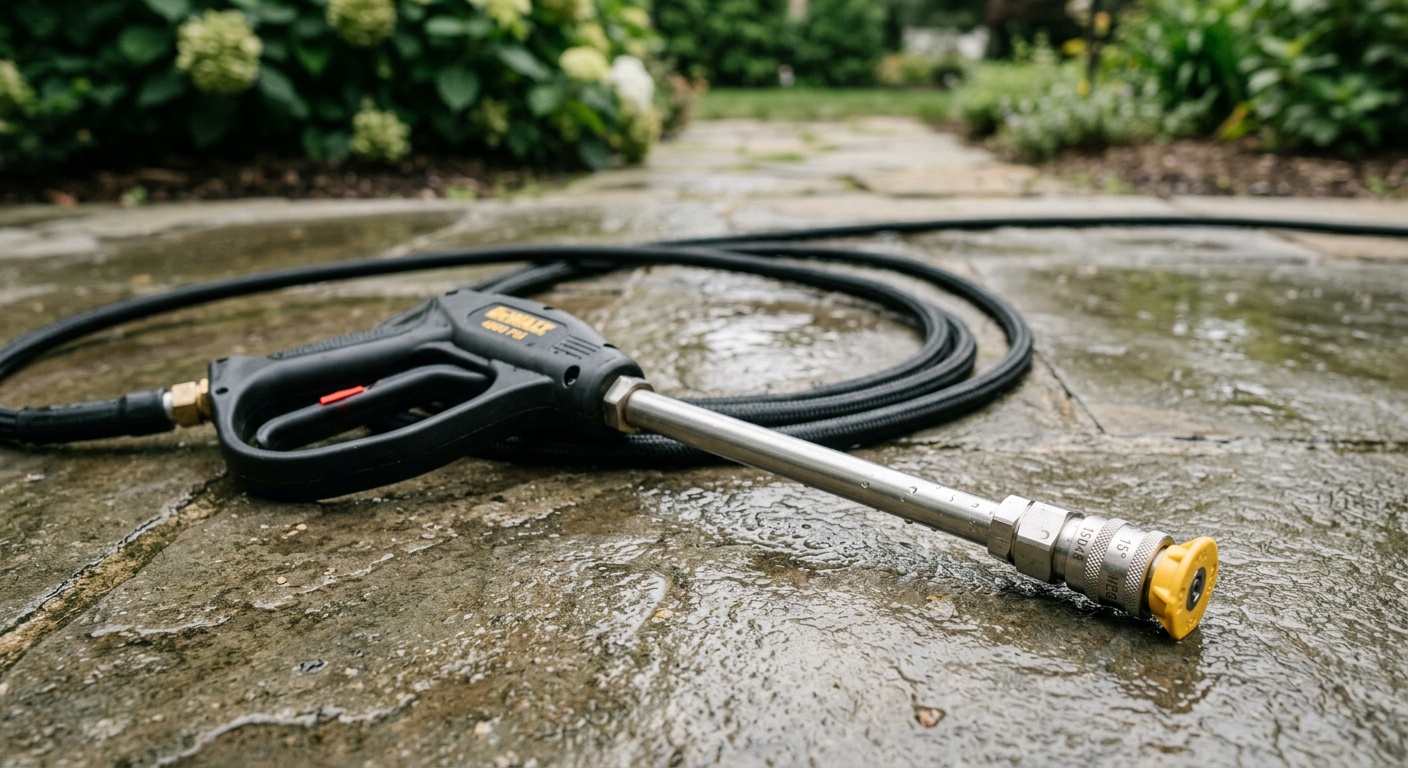
Pressure washing uses highly pressurized water — typically ranging from 1,500 to 4,000 PSI (pounds per square inch) — to blast away dirt, grime, oil stains, and loose paint from hard surfaces. The mechanical force of the water does the heavy lifting. Think of it as the power tool of exterior cleaning: effective, fast, and unforgiving if misused.
Modern pressure washers in 2026 have evolved significantly. Many professional-grade units now feature adjustable pressure settings, rotating nozzles, and even smart sensors that detect surface hardness to auto-regulate output. For homeowners, electric pressure washers ranging from 1,500–2,000 PSI are widely available at hardware stores for $150–$400, while gas-powered units capable of 3,000+ PSI can run $500–$1,200 or more.
What Pressure Washing Does Best
Pressure washing excels at removing physical deposits — things that are sitting on the surface rather than growing into it. This includes:
- Caked mud and soil on driveways and walkways
- Motor oil and grease stains on concrete
- Peeling paint before repainting a deck
- Chewing gum and heavy debris buildup on pavement
- Mineral deposits and efflorescence on masonry
The raw force of pressurized water physically dislodges these materials, often without any chemical assistance. That’s both its greatest strength and its greatest limitation: force works on hard surfaces, but it can damage, erode, or penetrate softer ones.
The PSI Spectrum: Understanding Pressure Levels
Not all pressure washing is created equal. Understanding PSI ranges helps you avoid catastrophic mistakes:
- Under 1,500 PSI: Light-duty residential use — rinsing outdoor furniture, vehicles
- 1,500–2,000 PSI: Light concrete, patios, garden walls
- 2,000–3,000 PSI: Driveways, sidewalks, brick surfaces
- 3,000+ PSI: Industrial use, heavily stained concrete — not for residential surfaces
Pro Tip: The nozzle angle matters just as much as PSI. A 0-degree red nozzle concentrates force into a pinpoint — powerful enough to cut through skin. A 40-degree white nozzle disperses the stream safely. Always start with a wider nozzle and work inward only if needed.
What Is Soft Washing?
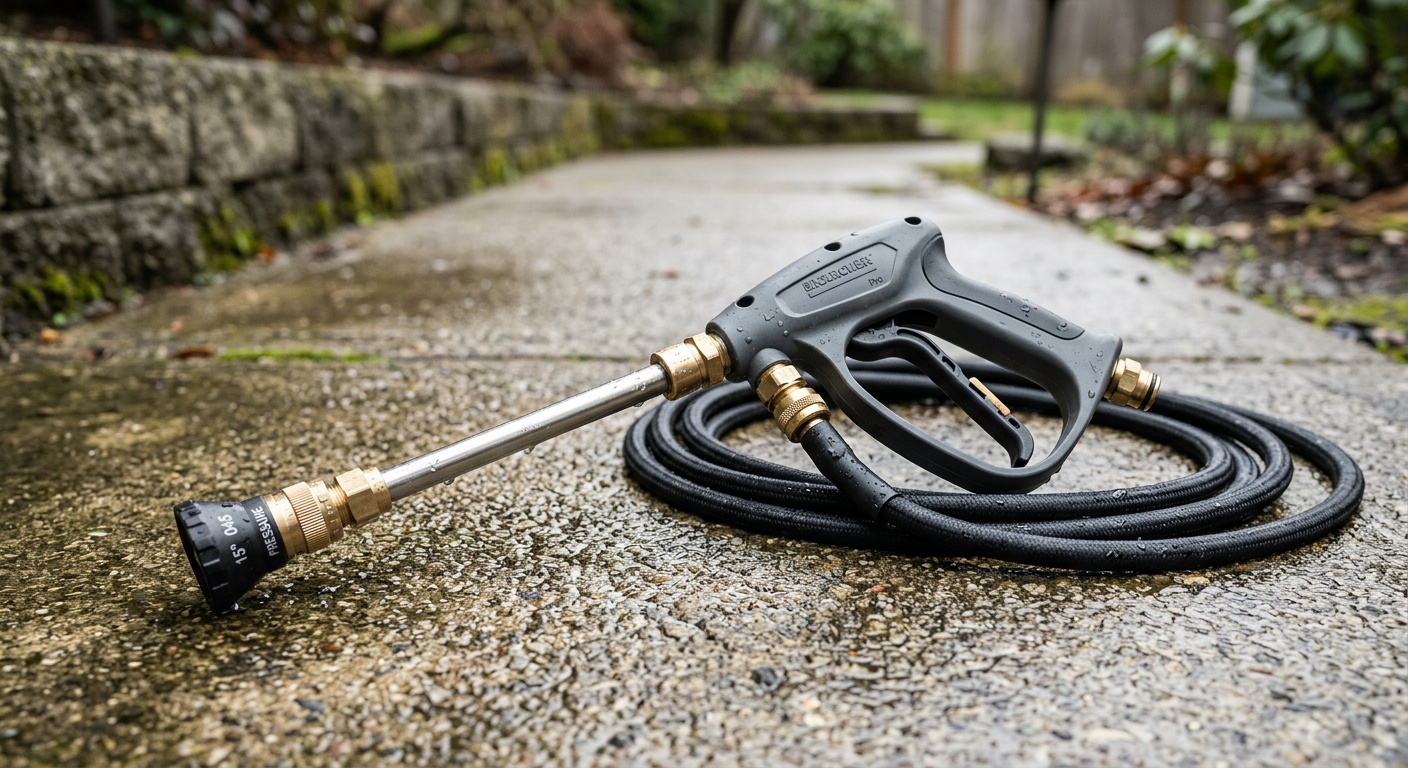
Soft washing is a low-pressure cleaning method — typically operating at 60–500 PSI, well below standard garden hose pressure in many cases — that relies on specialized chemical solutions rather than mechanical force to clean surfaces. The cleaning agents do the real work: killing biological growth at its root, dissolving organic staining, and leaving surfaces protected for longer.
A standard soft wash solution typically contains a blend of sodium hypochlorite (bleach) at diluted concentrations (0.5%–3%), surfactants that help the solution cling to vertical surfaces, and neutralizing agents to prevent runoff damage to landscaping. Some eco-conscious services in 2026 have transitioned to hydrogen peroxide-based alternatives, though sodium hypochlorite remains the industry standard for effectiveness.
Why Chemical Action Beats Force for Biological Growth
Here’s a concept that surprises most homeowners: pressure washing doesn’t actually kill algae, mold, or mildew. It removes it visually — but if the biological root systems remain embedded in your siding or roofing material, regrowth can begin within weeks. Soft washing’s chemical solutions penetrate and eliminate the organisms entirely, which is why results typically last 3–5 times longer than pressure washing on biological-growth-prone surfaces.
According to the Power Washers of North America (PWNA), soft washing results on roofing shingles in 2025 studies lasted an average of 4–6 years before retreatment was needed, compared to 1–2 years for high-pressure methods on the same surfaces.
Surfaces Purpose-Built for Soft Washing
- Asphalt roofing shingles — the most critical soft-wash-only surface
- Cedar or wood shingles and siding
- Stucco and EIFS (synthetic stucco) surfaces
- Vinyl siding (though low-pressure washing also works here)
- Painted surfaces where paint integrity must be preserved
- Screened enclosures and pool cages
- Older or fragile masonry
Key Differences at a Glance
| Factor | Pressure Washing | Soft Washing |
|---|---|---|
| Operating Pressure | 1,500–4,000+ PSI | 60–500 PSI |
| Primary Cleaning Agent | Mechanical water force | Chemical solutions + low pressure |
| Results Duration | 6 months–1.5 years (biological surfaces) | 3–6 years (biological surfaces) |
| Risk of Surface Damage | High on delicate materials | Low (surface risk), moderate (plant risk) |
| Best For | Hard surfaces: concrete, stone, pavers | Roofs, siding, wood, painted surfaces |
When to Use Each Method
Use Pressure Washing When…
Pressure washing is your best tool when you’re dealing with hard, durable surfaces and non-biological staining. Here are the clearest use cases:
- Driveway and sidewalk cleaning: Concrete is dense enough to handle high PSI. Oil stains, tire marks, and embedded dirt come off effectively with 2,500–3,000 PSI and a surface cleaner attachment.
- Pre-paint prep on decks: Stripping old paint, loose sealant, and surface oxidation from wood decks before refinishing is one of pressure washing’s most practical applications — though technique matters enormously.
- Brick patio and retaining walls: Established, solid brick and mortar can handle moderate pressure (1,800–2,200 PSI) for removing moss and staining.
- Pool decks and paved areas: Hard pool surrounds, travertine tiles (with careful technique), and concrete pool decks respond well to moderate-to-high pressure.
Use Soft Washing When…
Soft washing is non-negotiable when surface integrity and biological kill-off are both priorities:
- Roof cleaning: This is the biggest one. Using a pressure washer on asphalt shingles can void your roofing warranty and strip granules that protect the shingle from UV degradation. The Asphalt Roofing Manufacturers Association (ARMA) explicitly recommends soft washing as the only approved cleaning method for asphalt shingles.
- Vinyl or aluminum siding with algae/mildew: The green and black streaking on siding is almost always biological. Pressure washing removes it temporarily; soft washing eliminates it.
- Painted wood surfaces: Fences, shutters, pergolas — pressure washing can chip and peel paint and raise wood grain. Low-pressure chemical application is far safer.
- Older homes with aged materials: Pre-1980s homes may have softer mortar, aging caulk seals, or deteriorating siding that simply won’t survive high-pressure treatment.
3 Common Mistakes and How to Avoid Them
Mistake #1: Pressure Washing an Asphalt Roof
This is the most costly error homeowners make. In 2025, roofing contractors across the U.S. reported a measurable uptick in premature shingle failure linked to improper high-pressure cleaning. One case study from a home inspector in Atlanta documented a 12-year-old roof that needed full replacement just two years after an overzealous DIY pressure wash — the granule loss had accelerated UV damage beyond recovery. The repair cost exceeded $14,000.
The fix: Always soft wash roofing surfaces. If you hire a contractor, ask specifically whether they’re using a soft wash system and what PSI they operate at for roof applications. Any answer above 500 PSI is a red flag.
Mistake #2: Using Chemical Solutions Without Protecting Landscaping
Soft washing chemicals — particularly sodium hypochlorite — can kill grass, shrubs, and garden plants if runoff isn’t managed. Many first-time DIYers or budget contractors neglect this step entirely.
The fix: Before any soft wash application, pre-wet all surrounding plants and soil thoroughly. Cover sensitive shrubs with plastic sheeting. After washing, rinse landscaping immediately and generously. Professional contractors should include a post-rinse protocol in their service agreement — don’t accept a quote from someone who doesn’t mention it.
Mistake #3: Assuming “More Pressure = Cleaner”
This is the rookie mindset that causes surface etching on concrete, stripped paint on wood, and splintered deck boards. Higher PSI is not better — it’s just more powerful, and power without precision causes damage.
The fix: Match your PSI to the surface, not to your impatience. Start with the lowest effective setting, test in an inconspicuous area, and increase incrementally only if needed. For most residential surfaces, you’ll rarely need to exceed 2,000 PSI.
Cost Breakdown: DIY vs Professional in 2026
Understanding the financial calculus here can save you real money — or justify spending it. Here’s what you’re looking at in 2026 markets:
DIY Pressure Washing Costs
- Equipment rental (1 day): $75–$140 for a 2,500 PSI gas unit
- Purchase (electric, entry-level): $150–$350
- Cleaning detergents: $15–$40
- Time investment: 4–8 hours for a typical home exterior
Professional Pressure/Soft Washing Costs
- Driveway (standard 2-car): $120–$250
- House exterior soft wash (2,000 sq ft): $280–$550
- Roof soft wash: $350–$700 depending on pitch and square footage
- Full exterior package (house + driveway + walkways): $500–$950
Note: Prices reflect average 2026 rates across mid-size U.S. markets. Coastal metro areas like Los Angeles, Miami, and New York typically run 25–40% higher.
The smart equation: For driveways and hard surfaces you can confidently tackle yourself, DIY makes financial sense. For roofing, complex siding, or any surface where a mistake could mean thousands in repairs, professional service is the better investment every time.
Real-World Scenarios
Scenario A: The Suburban Ranch Home in Florida
Maria owns a 1,800 sq ft stucco ranch home in Tampa. By spring 2026, her north-facing exterior walls were covered in green algae, her screened lanai had developed significant mildew staining, and her concrete driveway had dark oil spots from a slow power steering leak.
The solution: Her contractor used soft washing for the stucco walls and lanai screening (protecting both surfaces and eliminating biological growth at the root), then switched to pressure washing with a surface cleaner attachment at 2,800 PSI specifically for the concrete driveway. The bifurcated approach cost $480 total — and her contractor estimated the soft wash on her stucco should hold for 3–4 years before retreatment.
Scenario B: The Pacific Northwest Colonial with Cedar Siding
James and his partner purchased a 1992 cedar-sided colonial in Portland, Oregon. Pacific Northwest conditions mean relentless moisture — their siding had developed heavy black streaking from mold and mildew, and their roof showed early signs of moss growth.
The critical call: They initially hired a budget contractor who showed up with a standard pressure washer. Their neighbor — a retired general contractor — flagged the issue before work began. The cedar siding would have been significantly damaged at high pressure, and the roofing was asphalt shingles already 18 years old. They found a soft washing specialist who treated both surfaces with a 1.5% sodium hypochlorite solution. Result: the siding was transformed, the moss was eliminated from the roof, and their roofing contractor confirmed the shingles showed no granule loss post-treatment.
Effectiveness by Surface Type: Soft Wash vs Pressure Wash
The chart below illustrates the relative effectiveness rating (out of 100) of each method across five common residential surfaces, based on industry assessments and PWNA data from 2025.
Green bars = Soft Washing | Blue bars = Pressure Washing | Red bars = Pressure Washing (high-risk surfaces)
Frequently Asked Questions
Can I use a pressure washer on my roof if I keep the pressure low?
It’s a common workaround that many homeowners attempt — and it’s not recommended. Even at reduced PSI, the issue with pressure washing asphalt shingles isn’t just force; it’s the direction of water penetration. Shingles are designed to shed water flowing downward. Any pressurized spray risks driving water upward under shingle layers, potentially reaching the underlayment or decking and creating moisture damage. Additionally, many manufacturers state in their warranty documentation that any pressure washing — regardless of PSI — can void coverage. Soft washing with a low-pressure, chemical-based approach remains the only method endorsed by the ARMA and most roofing manufacturers in 2026.
How often should I pressure wash or soft wash my home’s exterior?
The honest answer is: it depends on your climate, materials, and exposure. As a general framework — concrete driveways and hard surfaces benefit from annual or bi-annual pressure washing, especially in climates with heavy pollen seasons or freeze-thaw cycles. Soft washing for siding and roofing is typically needed every 2–4 years in moderate climates, and every 1–2 years in hot, humid environments like the Gulf Coast or Southeast U.S. where algae and mildew grow aggressively. Rather than following a calendar, inspect your surfaces seasonally: visible biological growth, streaking, or a noticeably dull appearance are your real indicators that it’s time to clean.
Is soft washing safe for the environment and my pets?
Soft washing chemicals — particularly sodium hypochlorite — are biodegradable and break down relatively quickly once diluted and exposed to sunlight, but they are not harmless during application. Runoff can impact aquatic ecosystems if it enters storm drains, and it will damage plants and grass if allowed to pool. Keep pets and children away during application and for at least 30–60 minutes after treatment until surfaces have been rinsed and chemicals have neutralized. In 2026, several professional services now offer plant-based, hydrogen peroxide alternative formulations that have a more favorable environmental profile, though their efficacy against heavy mold and mildew can be slightly lower. If you’re in a water-sensitive area or near a natural waterway, ask your contractor specifically about eco-formulation options.
Your Clean Home Action Plan: Making the Right Call
You don’t need to become an expert in pressure dynamics or chemical surfactants. You just need a clear decision framework — and now you have one. Here’s how to put this into action immediately:
- Audit your surfaces first. Walk your property and categorize each surface: hard and durable (concrete, pavers, brick) vs. soft and sensitive (roof, siding, wood, stucco). This one step makes 80% of your method decision for you.
- Identify what you’re cleaning. Is it physical debris and staining, or biological growth (algae, mold, mildew, moss)? Biological growth almost always calls for soft washing’s chemical approach.
- Decide DIY vs. professional honestly. Hard surfaces like driveways? DIY is cost-effective and low-risk. Roofing, complex siding, or aged materials? Hire a certified professional — the cost is a fraction of potential damage repair.
- Vet your contractor if going professional. Ask two questions: What PSI do you use on roofing? Do you have a plant-protection protocol for soft washing? The answers will immediately separate competent pros from corners-cutters.
- Document your home’s exterior condition. Take photos before and after cleaning. This creates a useful baseline for tracking surface health year over year and provides documentation if warranty questions arise with roofing or siding manufacturers.
As homes in 2026 increasingly factor curb appeal and exterior condition into automated property valuations — with platforms like Zillow and Opendoor incorporating visual AI assessments — the condition of your home’s exterior matters more than ever to your financial investment. A clean, well-maintained exterior isn’t cosmetic vanity; it’s asset protection.
So here’s the question worth sitting with: What is the single most neglected surface on your home’s exterior right now — and do you know which cleaning method would actually solve the problem, not just mask it for a season? Start there. The right method, applied to the right surface, isn’t just cleaner — it’s smarter homeownership.